
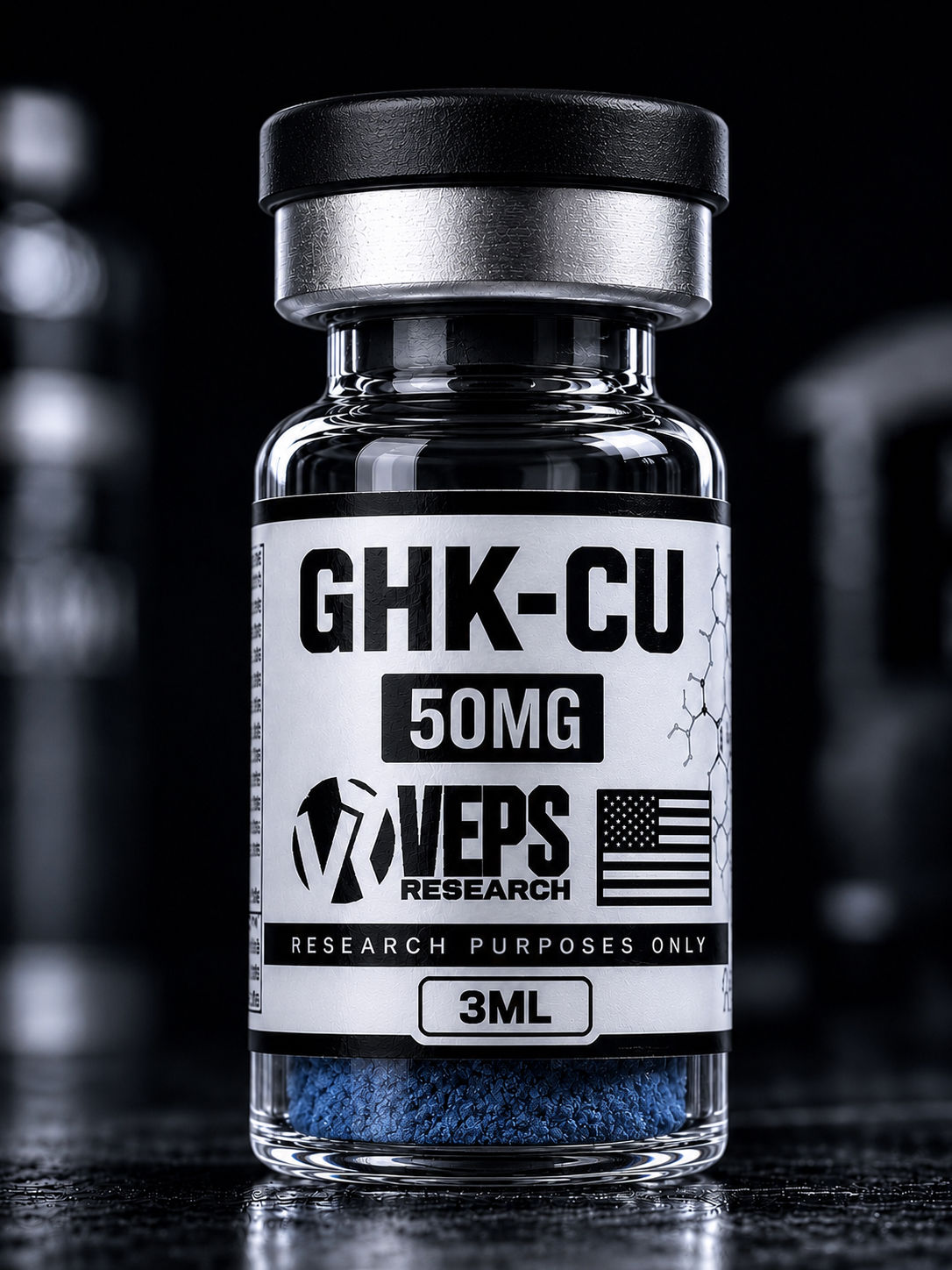

The Veps Research GHK-Cu Peptide (Glycyl-L-histidyl-L-lysine copper complex) is a highly purified, naturally occurring copper tripeptide. First isolated from human plasma in 1973, this compound is distinguished by its high affinity for copper(II) ions, which gives the lyophilized powder and reconstituted solution its signature blue coloration. It has become a premier subject of study in the fields of dermal tissue remodeling, wound healing, and cellular regeneration.
At Veps Research, we maintain strict adherence to laboratory-grade standards. This GHK-Cu Peptide is subjected to rigorous independent testing to verify its structural sequence and copper-binding integrity, ensuring that researchers receive only the most reliable compounds for their in-vitro cell culture assays and structural remodeling models.
Mechanisms of Action: Copper Delivery and Tissue Remodeling
In standard laboratory models, this compound acts as an incredibly efficient carrier for copper ions, which are essential cofactors for numerous oxidative enzymes involved in cellular function. Unlike generic peptides, the GHK-Cu Peptide has been shown to modulate the expression of multiple human genes, essentially resetting cellular pathways to a healthier, more youthful state.
Researchers are primarily focused on the following biological pathways:
Collagen and Elastin Synthesis: In in-vitro dermal models, it is heavily investigated for its ability to vigorously upregulate the synthesis of collagen, elastin, and glycosaminoglycans, which are the fundamental structural components of the extracellular matrix.
Tissue Remodeling & Metalloproteinases: Research suggests it possesses unique dual-action properties—simultaneously modulating the breakdown of damaged scar tissue by matrix metalloproteinases while accelerating the deposition of healthy new cellular infrastructure.
Anti-Inflammatory & Antioxidant Activity: Studies indicate it actively reduces the secretion of inflammatory cytokines (such as TGF-beta) and protects cellular models from oxidative stress by regulating antioxidant enzymes like superoxide dismutase.
Why Source from Veps Research?
Verified Analytical Excellence: Every batch undergoes strict High-Performance Liquid Chromatography (HPLC) and Mass Spectrometry testing to guarantee ≥99% purity.
Domestic Operations: We dispatch all orders directly from our climate-controlled facility in Albuquerque, NM. This ensures rapid transit times, eliminating the risk of customs seizures, temperature fluctuations, and international shipping degradation.
Uncompromising Quality: Our compounds are strictly handled in sterile environments to preserve their delicate peptide-copper bonds before ever reaching your laboratory.
Advanced Reconstitution & Storage Protocols
Due to its unique metallic-peptide complex, the lyophilized GHK-Cu Peptide requires precise laboratory reconstitution techniques. Always utilize sterile Bacteriostatic Water as your primary diluent for in-vitro assays.
When introducing your chosen diluent, direct the needle against the inner glass wall of the vial. Allow the liquid to slide down gently to prevent the physical shearing of the peptide sequence. Never shake or vigorously agitate the vial under any circumstances. Instead, gently roll the glass between your fingers until the lyophilized powder is fully dissolved and the solution achieves complete optical clarity (displaying a vivid blue hue). Foaming indicates molecular fracturing and severely compromises the efficacy of the compound.
Storage Guidelines: Prior to reconstitution, the lyophilized powder should be stored away from light at -20°C. Once reconstituted, the liquid solution is sensitive to thermal degradation and must be continuously refrigerated at 4°C. Researchers should always utilize appropriate personal protective equipment (PPE), including nitrile gloves, during handling procedures.
https://portal.ils-lab.com/verify/oKtpoY9-vZ5aYXP1
Note: This compound is strictly for in-vitro laboratory research use only and is not for human consumption, diagnostic, or therapeutic purposes.